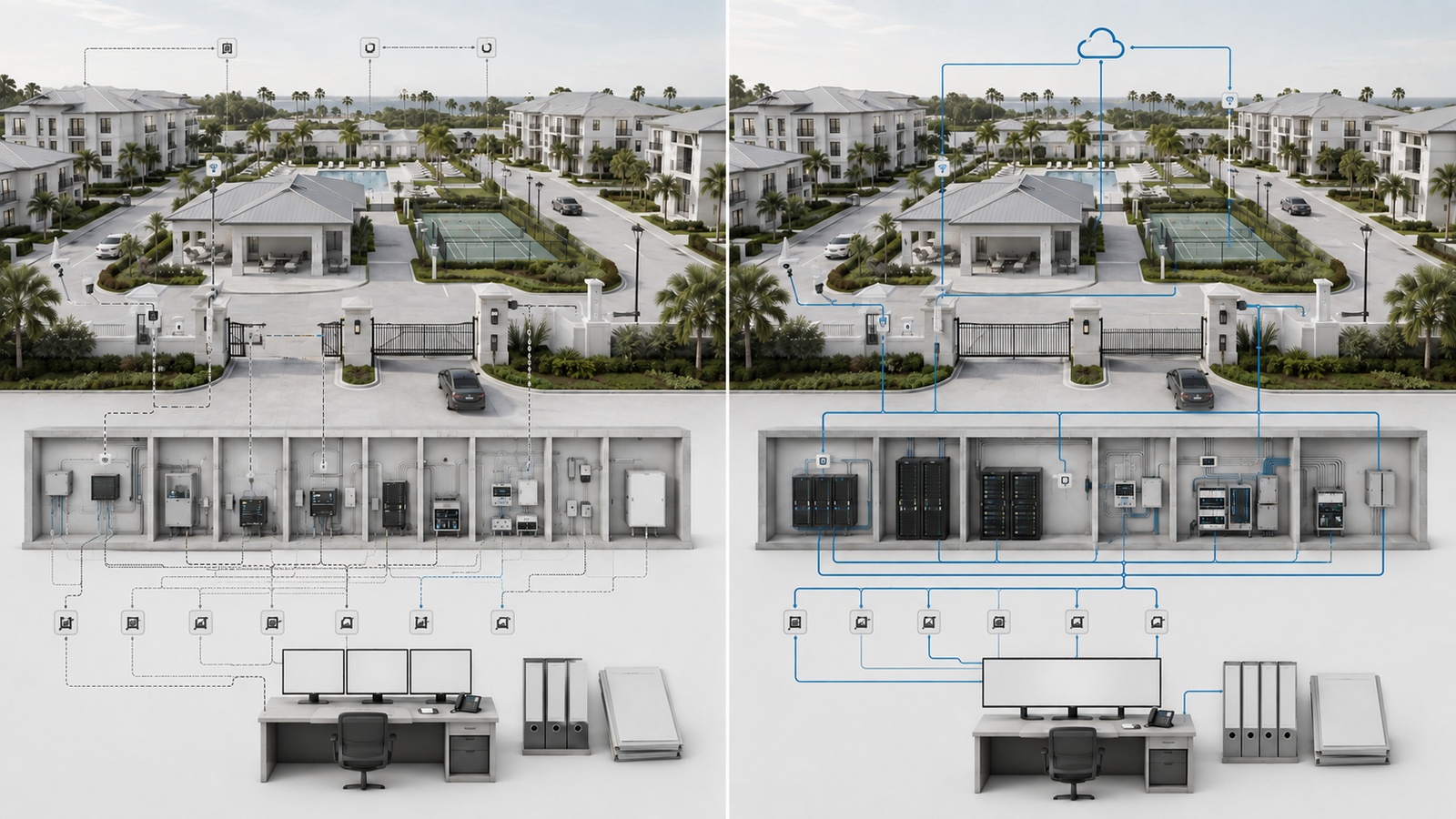
Smart property systems rarely fail because every installed device is defective. More often, a visible problem develops at the boundary between systems, vendors, infrastructure, and operating responsibilities.
A gate application may appear unreliable when the actual cause is unstable connectivity. Cameras may stop recording after storage expansion was never planned. Lighting schedules may become inconsistent because several people changed settings without documentation. Remote monitoring may generate alerts, but no one may be responsible for acknowledging them.
Each component can appear functional when tested independently while the complete resident or operational workflow remains unreliable.
This is why connected properties require more than successful installation. They require coordinated ownership throughout planning, deployment, operation, change, failure, and eventual replacement.
Key Takeaway: Smart property reliability depends less on the number of advanced features and more on whether infrastructure, vendors, responsibilities, changes, and recovery procedures are coordinated as one operating environment.
01 Most Failures Begin Before Installation
Fragmentation often starts when systems are purchased separately without a shared architecture. A gate contractor defines one scope, a surveillance company installs another platform, an electrician adds lighting controls, an internet provider supplies connectivity, and a different integrator manages access credentials.
Each vendor may complete its contracted work. However, important questions can remain unanswered:
- Which network and power services does each system require?
- Who provides cabling between locations?
- Who owns the equipment cabinet and environmental conditions?
- Which platform supplies accurate time, addressing, and name resolution?
- Who protects administrative accounts?
- Who tests an end-to-end resident workflow?
- Who responds when several systems fail simultaneously?
If these responsibilities are not defined before installation, assumptions replace coordination. One vendor may expect internet service to be available at the gate, while another assumes the gate contractor will provide communications. The issue may remain hidden until commissioning or the first outage.
Planning should begin with the service the property expects—not merely a list of devices. “Residents can enter reliably using approved credentials” is an operational outcome. A reader, controller, gate operator, network connection, and mobile application are components supporting that outcome.
02 Visible Symptoms Often Hide Shared Causes
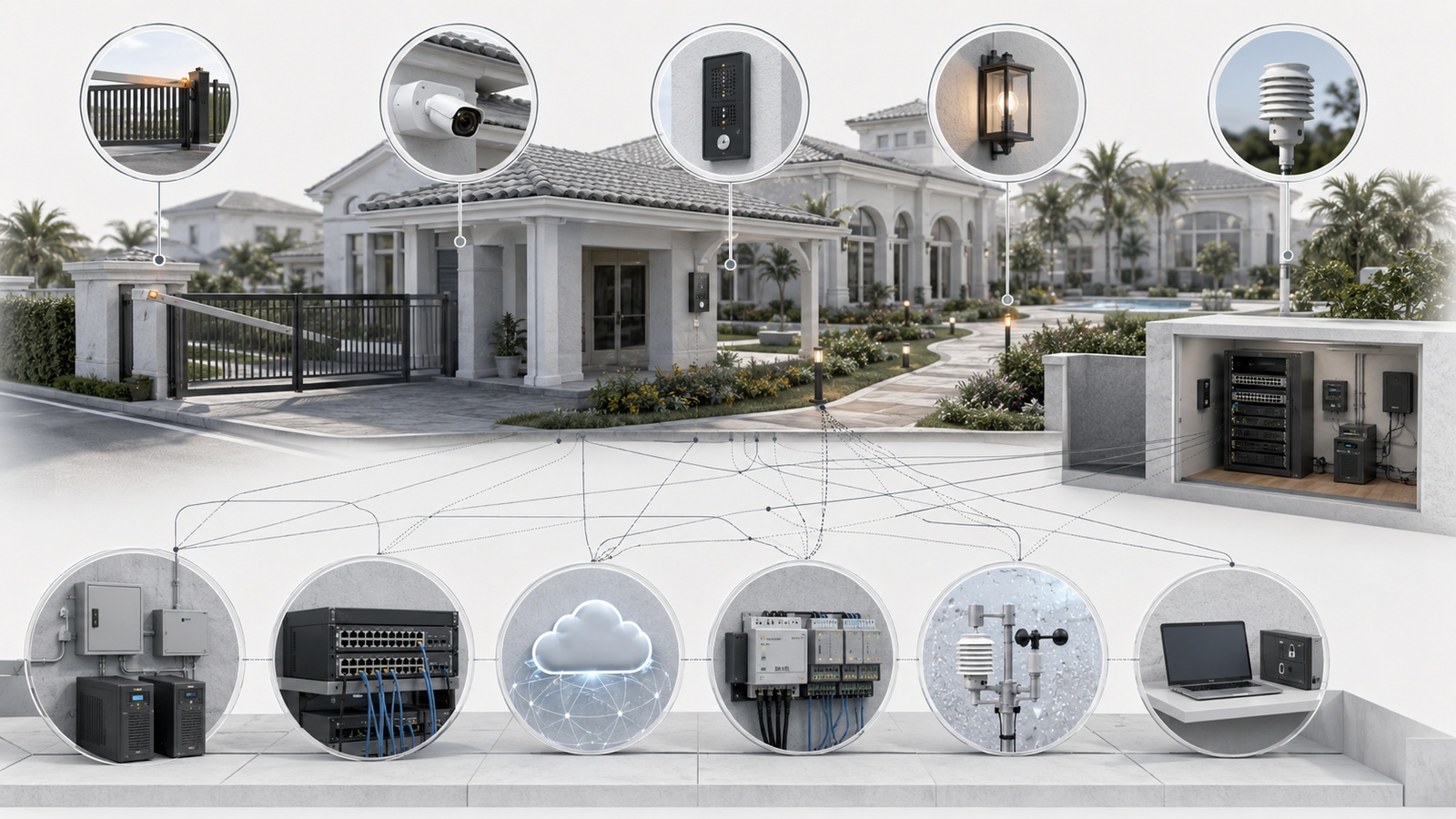
Connected systems share pathways, switches, internet connections, power sources, equipment rooms, cloud services, and administrative accounts. A failure in one shared dependency can create symptoms across several platforms.
| Visible Symptom | Possible Shared Cause | What to Verify |
|---|---|---|
| Gate, intercom, and camera fail together | Entrance network, fiber, switch, or power interruption | Shared cabinet, uplink, circuit, UPS, and environmental status |
| Several cloud platforms become unreachable | Internet, firewall, DNS, or authentication problem | External path, policy changes, name resolution, and account status |
| Events show incorrect times | Time-service or configuration inconsistency | NTP access, time zone, daylight-saving settings, and controller clocks |
| Intermittent outdoor device failures | Moisture, corrosion, heat, surge exposure, or unstable power | Enclosure, connections, drainage, environment, and electrical protection |
| Mobile controls work inconsistently | Wireless, cellular, internet, cloud, or application dependency | Complete communication path under realistic conditions |
Troubleshooting only the visible endpoint can lead to repeated component replacement without correcting the real problem. A new camera connected through a failing outdoor pathway may eventually develop the same symptoms as the camera it replaced.
A property dependency map helps teams identify shared causes. It should connect systems to their network paths, power sources, controllers, cloud services, equipment locations, and responsible support providers.
03 Multiple Vendors Need One Operational Owner
Connected properties frequently require specialized contractors. The gate technician may not administer the firewall, and the network provider may not service the gate operator. Specialization is normal. Lack of coordination is the problem.
Component ownership answers who repairs a specific product. Service ownership answers who coordinates the complete operating outcome. These are not always the same responsibility.
A designated property technology owner or coordinator should understand:
- The systems and services deployed across the property
- The dependencies between them
- The primary and backup vendor contacts
- Administrative and account ownership
- Support and escalation procedures
- Current risks, warranties, and replacement plans
- Documentation and backup locations
This person does not need to personally repair every platform. The role is to coordinate investigation, preserve records, control changes, and ensure that issues are not abandoned between vendor scopes.
Contracts and project scopes should define demarcation points. If one contractor supplies the camera and another supplies the network, both parties should know how connectivity is tested, who accepts the result, and what evidence is required during troubleshooting.
Vendor access should also remain under property control. Permanent shared credentials, undocumented remote-access tools, and contractor-owned primary accounts make transitions difficult and reduce accountability.
04 Unmanaged Changes Create Delayed Failures
A property may operate successfully after installation and become unstable months later as unrelated changes accumulate. A switch is replaced, a firewall rule is broadened, an internet service changes, a lighting schedule is edited, a controller receives new firmware, or a camera is moved to a different port.
Each change may appear minor, but it can alter shared dependencies or invalidate the documentation used by other teams.
A practical change process should record:
- The reason and expected outcome
- The affected systems, locations, and users
- The person authorizing and performing the work
- Current configuration or backup state
- Dependencies and foreseeable risks
- Implementation and validation steps
- Rollback procedure
- Final result and documentation updates
The amount of control should reflect the risk. Renaming an informational dashboard does not require the same preparation as changing entrance-network addressing. High-consequence changes affecting gates, access control, surveillance, internet connectivity, or shared switching should receive stronger review and scheduled validation.
Emergency changes may still be necessary, but they should be documented afterward. Otherwise, temporary troubleshooting rules, bypasses, and alternate configurations can quietly become permanent.
Operational Principle: A technically successful change is not complete until the intended service is verified, the rollback decision is resolved, and the operating record is updated.
05 Documentation Must Describe the Operating Environment
A spreadsheet of device models is useful but insufficient. Effective documentation should help another qualified person understand how the property works, locate important equipment, administer it appropriately, and begin recovery without relying on one individual’s memory.
The operational record may include:
- Physical and logical network diagrams
- Equipment, controller, and sensor inventories
- Cabling, fiber, conduit, and enclosure locations
- Network zones, addressing, and required communication paths
- Power circuits, UPS systems, and generator dependencies
- Cloud platforms, subscriptions, licenses, and renewal ownership
- Administrative-account and recovery ownership
- Vendor contacts, contracts, and escalation procedures
- Configuration and database backup locations
- Resident, visitor, vendor, and emergency workflows
- Maintenance records and replacement plans
- Change history and known limitations
Passwords should be stored in an approved password-management system rather than directly inside broadly accessible documents. Documentation can identify the credential owner and secure storage location without exposing the secret itself.
Records should use consistent naming. The same entrance should not be called “Main Gate,” “Gate One,” “Front Entrance,” and “North Controller” across different vendor platforms unless those relationships are clearly documented.
Documentation must be reviewed after significant changes and periodically against the physical environment. An inaccurate diagram can misdirect troubleshooting more effectively than having no diagram at all.
06 Monitoring Without Ownership Creates Noise
Modern platforms can generate notifications for offline devices, failed connections, storage conditions, abnormal temperatures, water detection, low batteries, and many other events. This visibility is useful only when the response process is defined.
Common monitoring failures include:
- Alerts sent to a former employee
- Notifications delivered to an inbox nobody reviews
- Several vendors generating duplicate alarms
- Thresholds producing constant false positives
- Critical conditions mixed with informational events
- Recovery alerts closing incidents before service is verified
- Dashboards accessible only through one contractor’s account
Important alerts need an accountable recipient, acknowledgment expectation, escalation path, and closure procedure. A camera returning online does not necessarily prove that recording resumed. A network device responding again does not prove that every dependent service recovered.
Monitoring should follow the property’s dependency model. If an equipment-room switch fails, the operations team should understand which cameras, doors, lighting controllers, or sensors are expected to disappear with it.
The complete monitoring framework is explained in Remote Property Monitoring: What Modern Communities Actually Need.
07 Maintenance and Lifecycle Planning Prevent Emergencies
Connected infrastructure ages even when it appears to work normally. Batteries lose capacity, storage devices wear, outdoor enclosures corrode, fans collect dust, vendor support ends, subscriptions lapse, cables are damaged, and replacement parts become unavailable.
Reactive properties address these conditions only after a service interruption. Proactive properties maintain a schedule based on condition, criticality, support status, and operating environment.
Recurring reviews may cover:
- UPS and controller batteries
- Gate safety and vehicle-detection devices
- Camera recording and storage health
- Outdoor cabinets, seals, corrosion, and surge protection
- Network utilization and PoE capacity
- Software, firmware, and security support
- Administrator and vendor accounts
- Licenses, subscriptions, and warranties
- Configuration backups and restoration procedures
- Equipment-room temperature, cleanliness, and access
Lifecycle budgeting should identify systems approaching capacity, end of support, or unacceptable failure risk. Planned replacement allows the property to evaluate alternatives, coordinate downtime, preserve data, and update documentation. Emergency replacement usually limits those options.
Future-ready design principles are discussed in Future-Proofing Technology Infrastructure in Residential Properties.
08 Recovery Procedures Must Be Tested
A backup is valuable only if it is current, protected, understood, and usable. Properties may believe they have recoverable configurations while discovering during an outage that the file is outdated, encrypted by an unavailable vendor, stored on the failed device, or associated with an account nobody can access.
Recovery planning should consider:
- Gateway, firewall, switch, and wireless configurations
- Access-control databases and controller settings
- Camera and recorder configurations
- Lighting schedules and controller programming
- Monitoring rules and notification ownership
- Cloud-account recovery and multifactor-authentication continuity
- Internet and communications failover
- Manual gate, door, and property operating procedures
- Replacement-equipment availability and lead times
Testing does not always require a disruptive full shutdown. Tabletop exercises can walk staff and vendors through a realistic scenario: the entrance cabinet loses power during a storm, the primary internet connection fails, or the only knowledgeable administrator becomes unavailable.
Technical tests can then validate selected elements under controlled conditions, such as configuration restoration, UPS runtime, internet failover, local credential operation, camera recording continuity, and alert escalation.
Recovery procedures should identify who can authorize major actions, who contacts residents or staff, which temporary process applies, and how normal operations are verified before the incident is closed.
09 Create a Coordinated Operating Model
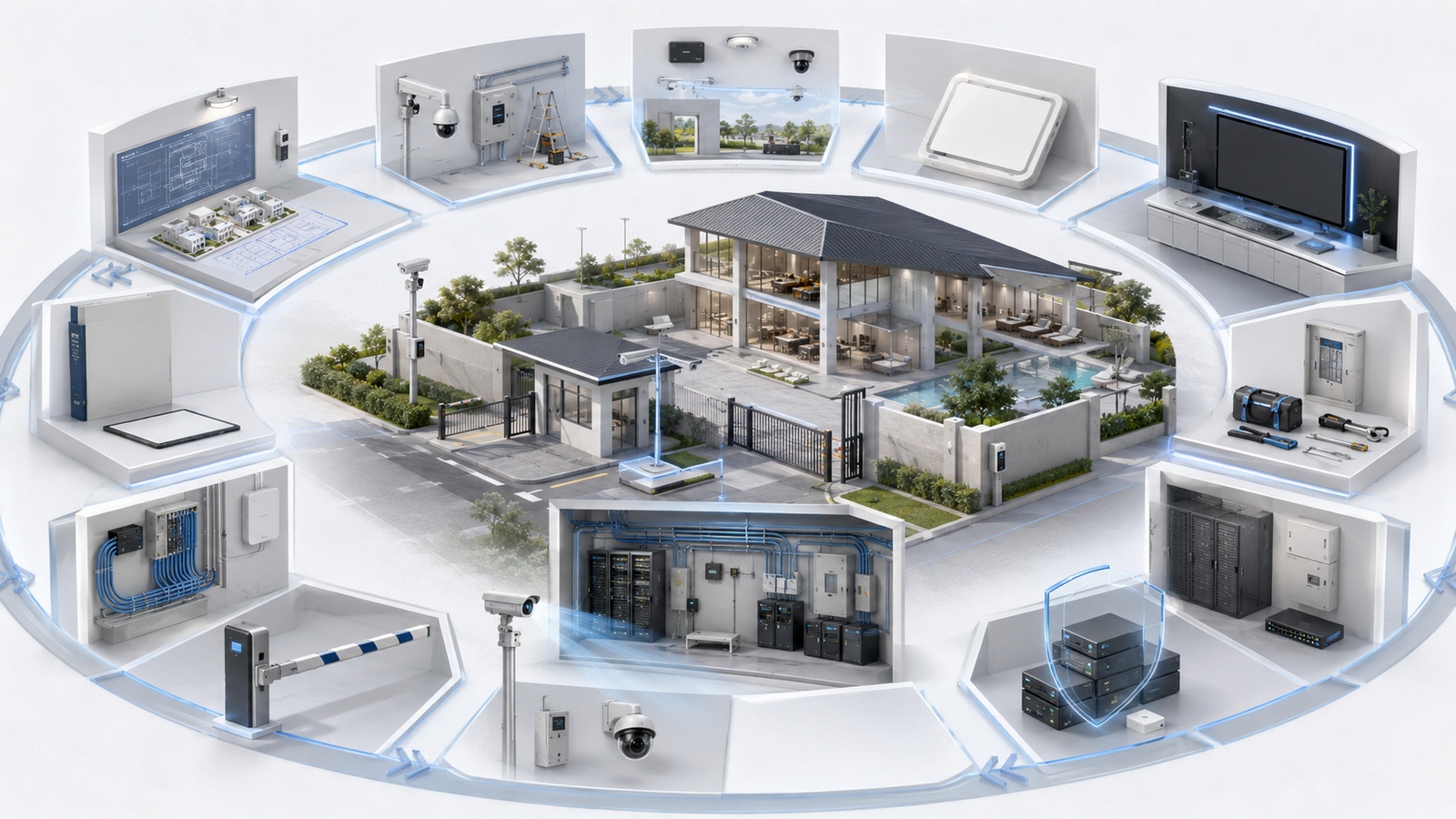
Operational coordination does not require a large internal technology department. It requires clear ownership, accurate information, appropriate partners, and repeatable procedures proportional to the property.
Smart Property Coordination Checklist
- Define property services and expected operational outcomes.
- Map each service to its devices, network, power, controller, cloud, and vendor dependencies.
- Assign one accountable coordinator for cross-system issues.
- Document vendor demarcation points and escalation paths.
- Maintain property ownership of primary accounts, records, and backups.
- Use controlled, named, and reviewable vendor access.
- Apply proportional change management to shared infrastructure.
- Verify complete workflows after changes—not only individual devices.
- Maintain current diagrams, inventories, contracts, and support procedures.
- Route meaningful alerts to accountable responders.
- Review batteries, storage, capacity, environmental conditions, and support status.
- Budget for planned lifecycle replacement.
- Maintain protected configuration and database backups.
- Test selected outage, failover, and recovery procedures.
- Record lessons from incidents and update standards accordingly.
Incident reviews should focus on improvement rather than blame. Determine what happened, which dependency failed, why monitoring or response did not prevent greater impact, what restored service, and which architectural or procedural change will reduce recurrence.
Recurring problems are evidence. If several unrelated systems repeatedly fail in one outdoor cabinet, the property should investigate power, environment, pathway, or network conditions rather than continuing to replace endpoints individually.
Smart property systems become sustainable when technology is treated as shared operational infrastructure. Clear ownership, dependency awareness, controlled change, monitoring, maintenance, documentation, and recovery planning allow specialized vendors to work within one coordinated environment.
Without that coordination, even premium systems gradually become fragmented. With it, properties can improve reliability, shorten outages, protect their investments, and adopt new technology without losing control of the environment they already operate.